
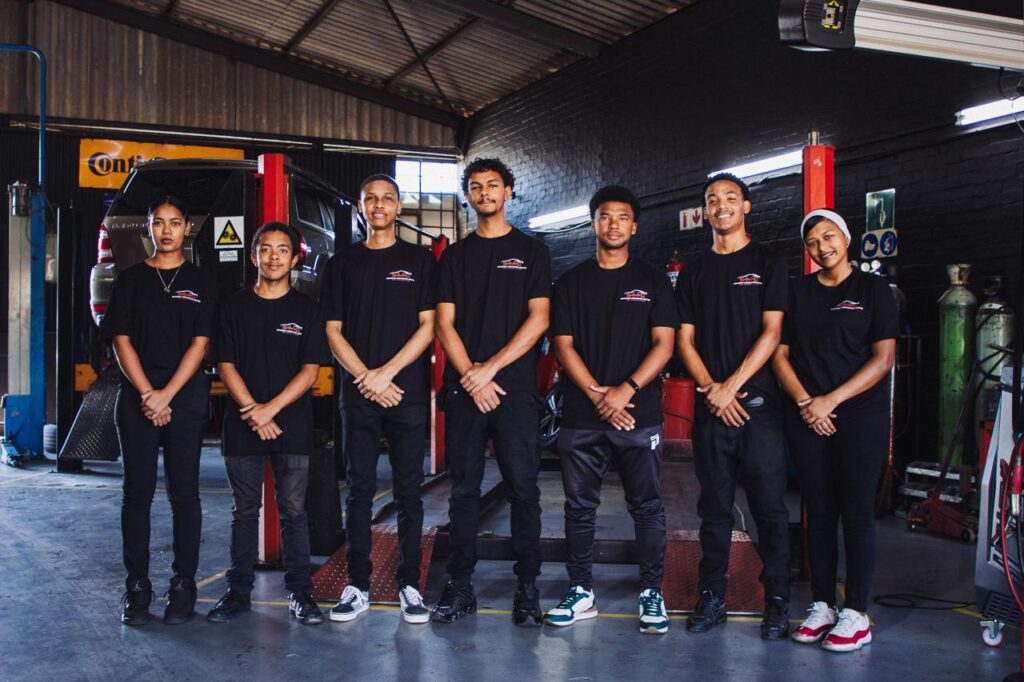
A women-led automotive workshop in Somerset West is taking an innovative step to address South Africa’s critical skills shortage by transforming its operations into a hands-on training space for young aspiring mechanics.
Motor Industry Workshop Association (MIWA) member, Somerset Mechanical Centre (SMC), owned by Director Tazkia Abrahams and Co-Owner Marjory Mentoor, has been serving the Helderberg community for over 15 years. Now, the team is expanding its role beyond repairs to actively contribute to skills development in the sector.
The idea was sparked by a growing challenge faced not only by SMC, but by the broader industry – the shortage of qualified mechanics.
“Over the past year, we placed several job adverts and found it incredibly difficult to source properly trained mechanics,” says Abrahams. “Through discussions with manufacturers and industry stakeholders, it became clear that everyone is competing for the same limited pool of skills.”
Recognising the need for a more proactive solution, Abrahams and Mentoor began exploring how they could use their workshop as a platform for training and mentorship.
“We asked ourselves how we could contribute more meaningfully, not just as business owners, but as members of the community,” says Abrahams. “That’s where the idea of opening our workshop as a training space really took shape.”
The initiative will primarily target matriculants from surrounding rural communities, including Strand, Macassar, Firgrove, Sir Lowry’s Pass, and Grabouw – many of whom face limited access to further education and employment opportunities.
At the core of the programme is a strong emphasis on practical, hands-on experience.
“Technical skills are critical, but so is guidance,” says Abrahams. “Young people need support to understand what it means to be in a workplace – from punctuality and accountability to working within structured processes.”
Training will cover core mechanical skills, with opportunities for specialisation in areas such as diesel mechanics and wheel alignment. In addition, learners will be exposed to the realities of a regulated workshop environment, including compliance with industry standards.
The initiative is being developed in collaboration with key industry stakeholders, including MIWA and the Retail Motor Industry Organisation (RMI) and merSETA, with all organisations providing guidance and support.
“This kind of collaboration is essential,” says Mentoor. “Training authorities bring the framework, while workshops provide the practical experience. Together, we can create something that truly prepares young people for the industry.”
Beyond skills development, the project also has a strong community upliftment focus.
“A big part of our vision is to create opportunities for young people in rural areas who may not otherwise have access to this kind of training,” adds Mentoor.
While the initiative has gained strong support, challenges remain, particularly around funding, transport and basic needs for trainees.
“We’ve already invested significantly in upgrading our workshop and equipment to create a suitable training environment,” says Abrahams. “But we also need to think about practical realities like how students get to the workshop and ensuring they have meals during the day. These factors can directly impact their ability to learn and succeed.”
Despite these challenges, progress is well underway, with compliance processes nearing completion and renovations ongoing.
If all goes according to plan, SMC aims to officially launch the training facility on 1 July 2026.
Looking ahead, Abrahams has an ambitious vision for the initiative.
“Ultimately, we would like to build something similar to a fully-fledged training centre here in the Helderberg,” she says. “A place where young people can come to learn a trade, gain real experience and build a future.”
As the automotive sector continues to grapple with a shortage of technical skills, initiatives like this highlight the critical role that independent workshops can play in shaping the next generation of artisans.