
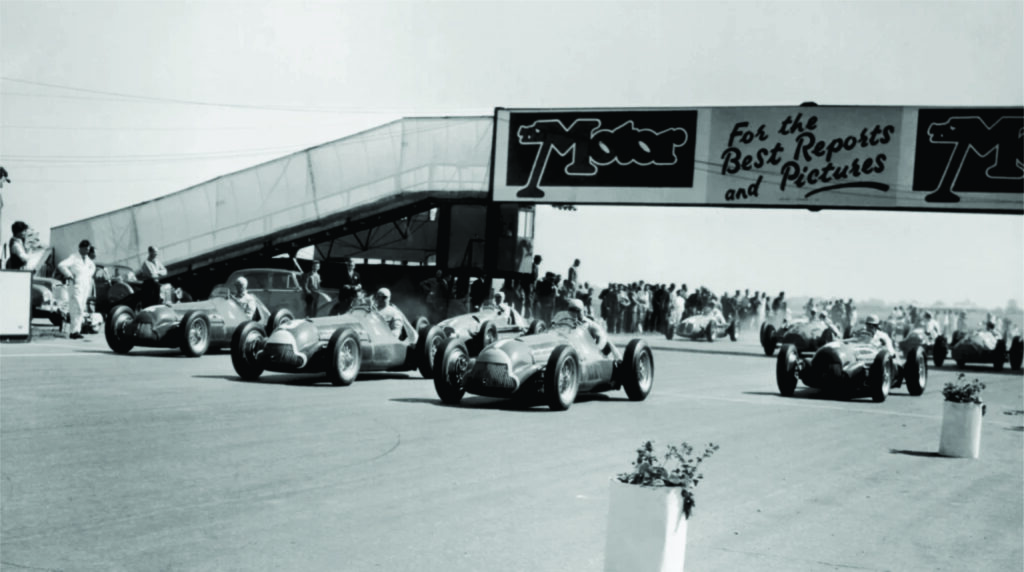
If you ever wondered why that tiny island off the coast of Europe somehow managed to dominate a sport as fast, flashy, and occasionally deadly as Formula 1, well … you’re not alone. And surprisingly, the answer isn’t because Brits just love driving fast cars – though that’s part of it. In fact they are a little bit mad about racing anything with an engine, including sit-on grass cutters!
The real story is a fascinating cocktail of history, industrial grit, academic brilliance, and an uncanny talent for turning engineering dreams into reality. So, buckle up and get ready for a ride through the winding, turbocharged road of Britain’s F1 supremacy – where the engines hum and the egos are just as big.
A Brief History of F1 Teams (With a British Twist).
Let’s kick things off with a quick lap around the history of F1 teams, with a focus on the British ones, because honestly, they’re the ones who’ve been leading the pack for decades (Apologies to Ferrari, but in truth, even they are mainly designed in England and use British high technology.) Imagine a sport born in the post-war chaos of Europe, where a bunch of engineers and drivers thought, “Hey, what if we put a really powerful engine in a really fast car and raced around in circles?” And thus, Formula 1 was born in 1950, with the first World Championship. Back then, the big players were Italian (Ferrari), German (Mercedes), and a smattering of other European brands. But among these, Britain’s contribution was less about just racing and more about engineering the very machines that made F1 what it is today.
Then came The British Invasion (On the Track and Off). By the 1950s, British teams and manufacturers started making their mark.
Think of them as the underdog churning out tea and crumpets during the day, then designing groundbreaking racing cars at night.
The legendary Lotus team, founded by Colin Chapman in 1952, was the first to really shake things up. Lotus didn’t just want to win; they wanted to change the game – introducing ground effect aerodynamics and lightweight chassis design that made cars stick to the track like glue. Then came McLaren in 1963, a team born from a daredevil driver with a knack for innovation. Bruce McLaren’s team became famous not just for winning races but for pioneering carbon fiber composites and hybrid technology – long before they were fashionable outside of the aerospace industry. Williams, founded in 1977, kept the British tradition of pushing engineering boundaries with advanced aerodynamics and chassis design. Meanwhile, Brabham, starting as a driver’s team in 1960, contributed turbocharging and sponsorship innovations that revolutionized racing economics and performance. And of course, Red Bull Racing – founded in 2005 – may be Austrian owned, but much of its technical brilliance is rooted firmly in the UK, employing some of the brightest British minds in motorsport engineering.
Why Is Britain the F1 Tech Mecca? (Spoiler: It’s Not Just Because of the Weather that makes them wander down to the garden shed and tinker with an idea because it’s too cold to be outside)
You might wonder, “What’s so special about Britain that it became the Silicon Valley of F1?” Well, the answer is: a perfect storm of history, industry, and culture.
1. The Industrial Revolution and Engineering Heritage.
Long before F1 cars zoomed around Monaco or Silverstone, Britain was already a global leader in engineering and manufacturing. The Industrial Revolution turned this little island into a powerhouse of innovation. Companies like Rolls-Royce and Bentley became symbols of precision engineering and luxury – traits that translated perfectly into racing machines, and fighter aircraft too. It’s no coincidence that aerospace giants like Rolls-Royce and aero-engine maker Cosworth originated here. The UK’s deep roots in aerospace, automotive, and defense industries provided a steady stream of skilled engineers who knew their way around high-performance machinery.
2. Automotive Ecosystem and Supply Chain.
Britain didn’t just stop at engineers; it created a dense network of specialized suppliers – gearboxes, aerodynamics firms, chassis builders – that formed a thriving ecosystem. Think of it as a Lego set, but with thousands of tiny, high-tech pieces that could be snapped together to build the fastest cars on Earth. This ecosystem meant teams could source cutting-edge parts locally, giving them a leg up over competitors who had to import everything from elsewhere. It also fostered collaboration, innovation, and a healthy dose of friendly rivalry.
3. Universities and Technical Schools.
The UK’s universities, especially Imperial College London, Cranfield University, and others, have been churning out aerospace and automotive engineers for decades.
These institutions are essentially F1’s unofficial minor leagues – producing talent that goes straight into the sport’s top teams. In a way, F1 is a sort of “engineer’s playground,” and Britain’s educational institutions are its nurturing grounds.
4. A Culture of Innovation and a bit of British Mischief.
Britain has long had a knack for turning engineering bravado into practical innovation. The British are not just content with following trends – they want to set them. Whether it’s pioneering ground effect aerodynamics with Lotus in the 1970s or leading the charge on hybrid power units today, British teams and engineers have consistently pushed the envelope. And let’s not forget, the British approach is often laced with a healthy dose of irony and humour – think of engineers joking as they design a car that’s faster than most jets, then quietly reveling in their own brilliance. And the Engines?
Nothing screams “British dominance” in F1 quite like the engines.
Today, the Ilmor Engineering designed and built Mercedes-AMG Petronas
F1 Team’s engines are the stuff of legend – powering the team to multiple championships with their hybrid V6 turbo engines. The Mercedes engine division is British. Based in Brixworth, Northamptonshire, it is a shrine of precision and innovation. These engines don’t just make cars go fast – they make them go further with less fuel, blending cutting-edge hybrid tech with brute performance.
And they are not the only engine manufacturers using the rich abundance of British engineering advantages, almost every F1 and IndyCar engine developer is heavily invested in UK engineering firms.
Historically, Cosworth – founded in Northampton in 1958 – was the engine supplier behind many legendary cars and drivers. Their high-performance racing engines powered Williams and other teams for decades, turning the UK into an engine design powerhouse. And let’s not forget the other iconic British engine names: BRM, Judd, and Rolls-Royce, each with a storied legacy of pushing technological boundaries.
The Irony of British Engineering.
Humble Roots, Loud Results: one of the most amusing aspects of British dominance is how it often springs from humble beginnings. Imagine a bunch of engineers in a small shed in Northampton designing a turbocharged engine, then suddenly their creation is winning races all over the world. That’s often the British way – quiet, unassuming, but utterly brilliant. And the irony doesn’t stop there. Many British teams and manufacturers are owned by multinational corporations, yet the true “heart” of their F1 success often beats in UK-based design offices and factories. It’s as if the British are the secret sauce – adding a dash of ingenuity, a pinch of stubbornness, and a lot of tea, of course.
Still Leading the Pack? You might think, “Well, Britain’s dominance is just a historical fluke.” Nope. It’s an ongoing story.
Mercedes’ British built engine continues to lead with their hybrid engines, and teams like McLaren and Williams remain at the forefront of innovation.
The UK’s focus on hybrid technology, aerodynamics, and lightweight materials ensures that British engineers will keep the sport’s technological baton moving forward. And as F1 pushes into electric and sustainable tech, Britain’s long-standing aerospace expertise will likely keep it at the cutting edge.
Why Does Britain Rule? (And Should We Be Surprised?)
In the end, Britain’s dominance in F1 isn’t just about speed; it’s about a culture of engineering excellence, a history of industrial innovation, and a knack for turning small ideas into global phenomena. It’s about a country that, despite its size, has repeatedly shown that with the right mix of talent, perseverance, and a bit of cheeky humour, it can dominate the fastest sport on earth. So next time you see a British team or engine roaring past in a blur of carbon and horsepower, remember: it’s not just luck. It’s a long, winding road paved with history, ingenuity, and a touch of British middle-finger-to-the-world!
In conclusion, the rise of F1 and Britain’s continued rule over its technology is a story of tradition meeting innovation. It’s a testament to how a nation with a rich industrial past and a never-say-die attitude can carve out a niche – then dominate it.
Because in the world of Formula 1, the British aren’t just racing; they’re rewriting the rules of the game.