
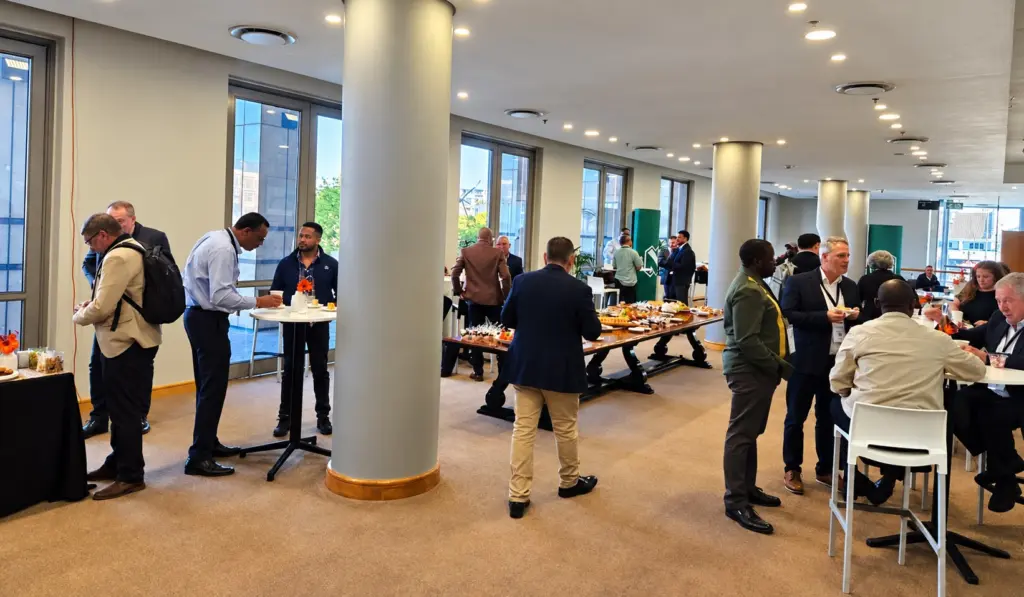
Bringing together influential voices from across the automotive, manufacturing, banking and business sectors, the inaugural CEO Breakfast hosted by Automechanika Johannesburg in collaboration with Nedbank provided an opportunity to reflect on the challenges, opportunities and future direction of South Africa’s automotive industry.
Held at the iconic V&A Waterfront in Cape Town, the event brought industry leaders together for an insightful morning of conversation, connection and collaboration, exploring where the sector is heading and what this means for businesses across the automotive value chain.
With discussions covering investment, localisation, economic pressures, manufacturing, skills development and access to finance, the morning highlighted the importance of collaboration between the private and public sectors in ensuring the continued growth and competitiveness of the South African automotive industry.
Introducing the guest speakers was Neil Piper, Head of Marketing & Content for Messe Frankfurt, who welcomed attendees and set the scene for a morning of meaningful industry engagement.
First to take the stage was Marc Dunnik, Head of Foreign Direct Investment (FDI) at Wesgro, who emphasised the importance of attracting investment and providing the necessary support to new investors. He highlighted the Western Cape’s position as a leader in renewable energy resources, identifying several advantages that make the province an attractive investment destination. These include export-ready infrastructure, a thriving clean energy industry, access to key markets, world-class research and innovation, and the support offered through the Atlantis Special Economic Zone (SEZ) and Freeport Saldanha. Combined with stable, business-friendly governance, skilled talent and one of Africa’s leading green technology hubs, the Western Cape has significant potential to attract further investment and stimulate economic growth.
The keynote address was delivered by Bobby Ramagwede, CEO of the Automobile Association of South Africa, who shared some hard truths about the current state of the automotive industry. With more than 5% of South Africa’s GDP dependent on the automotive sector, he stressed the importance of implementing the right policies to ensure the industry can thrive, particularly in relation to imports and the broader competitive environment in which local manufacturers operate.
Chrystal Huntley, Specialist Economist at Nedbank, followed with an insightful discussion on the economy and its impact on consumers.
Her presentation highlighted rising inflation expectations and dwindling trade activity during the second quarter, suggesting that economic recovery may be slower than initially anticipated at the beginning of the year.
These economic pressures inevitably influence consumer spending, vehicle demand and the operating environment for businesses throughout the automotive sector.
Providing an overview of what lies ahead for the industry, Tracy Gounden, Portfolio Director at Messe Frankfurt South Africa, outlined what visitors can expect at this year’s Automechanika Johannesburg.
Taking place at Gallagher Convention Centre from 27 to 29 October 2026, the exhibition will once again provide a platform for networking, business development and collaboration. She encouraged attendees to engage with Automechanika and make use of the opportunities to connect with fellow industry professionals and businesses.
Closing the presentations was Takatso Sello, Senior Manager – Manufacturing and Commercial Banking at Nedbank, who highlighted the bank’s commitment to partnering with the private sector to modernise businesses, encourage investment and strengthen South Africa’s ability to compete internationally. He emphasised that while the bank plays an enabling role, people remain at the centre of its approach to business and economic development.
The discussions throughout the morning extended beyond the large manufacturers, addressing issues that directly affect local suppliers, component businesses, workshops and smaller automotive enterprises. Topics included localisation and opportunities for local suppliers, manufacturing investment and modernisation, access to finance, skills development, technology, changing vehicle demand, and the logistics and infrastructure constraints facing businesses trying to manufacture, supply and distribute products from the Western Cape.
Ultimately, the question is not simply where the automotive industry is heading, but how businesses of all sizes will participate in its evolution.
For smaller businesses operating within the automotive value chain, changes in manufacturing, technology and consumer demand present both challenges and opportunities.
Localisation could create new opportunities for suppliers, while investment in modernisation may open doors for businesses able to adapt and innovate. However, access to finance, skills and reliable infrastructure remain critical considerations.
The inaugural CEO Breakfast served as a timely reminder that the future of South Africa’s automotive industry cannot rest solely on the shoulders of major manufacturers. Its success will depend on a connected, collaborative value chain where businesses of every size have the opportunity to grow, contribute and compete.
By bringing these voices together, Automechanika Johannesburg and Nedbank created a valuable platform for conversations that need to continue well beyond the breakfast table.