
The automotive aftermarket’s future depends on a skilled workforce that is able to keep pace with rapidly changing vehicle technology, and this was firmly in the spotlight during a three-day programme in George from 13 to 15 August.
Hosted as part of the RMI and MIWA’s ongoing commitment to technical skills development and industry engagement, the programme brought together independent workshop owners, suppliers, students, technical schools and young women to share knowledge, demonstrate practical skills and explore opportunities within the automotive sector.
The programme kicked off on 13 August with supplier training for RMI members, with TotalEnergies, Turbo Shop and Auto X delivering practical sessions on lubrication, turbocharger technology and battery care. The training focused on the increasingly complex technical requirements facing independent workshops, highlighting the importance of using the correct products, understanding new technologies and maintaining vehicles properly while awaiting parts. The sessions were highly interactive, with members engaging directly with suppliers and sharing experiences.
According to Peter van Mosseveld, Eastern Cape RMI Regional Manager, the strong engagement from members demonstrated the value of bringing suppliers and workshops together.
“The automotive aftermarket is changing rapidly, with new vehicles, new technologies and new products entering the market all the time. It is important that our members understand what is available and are able to keep up with these developments,” he says.
“Supplier engagement is crucial because it gives members the opportunity to speak directly to technical experts, share experiences and learn from one another. Taking people out of their normal working environment and creating a relaxed space for engagement makes these conversations particularly valuable.”
The programme then turned its attention to the industry’s future workforce, with 152 students and scholars participating in supplier training over the two-day programme. Students from UXI and two technical schools were exposed to the same technical expertise from TotalEnergies, Turbo Shop and Auto X.
The level of engagement from the students was particularly encouraging, with their questions and participation demonstrating a strong foundation of technical knowledge.
“The standard of knowledge among the students was pleasantly surprising,” says van Mosseveld. “They were engaged, they asked questions and they were clearly interested in understanding how the theory they are learning applies in the real world. That connection between training and industry is incredibly important.”
The student programme also provided valuable exposure for learners involved in Project Dineo and the wider Motor Mech Show initiative, with MIWA thanking African Skills for helping facilitate their participation.
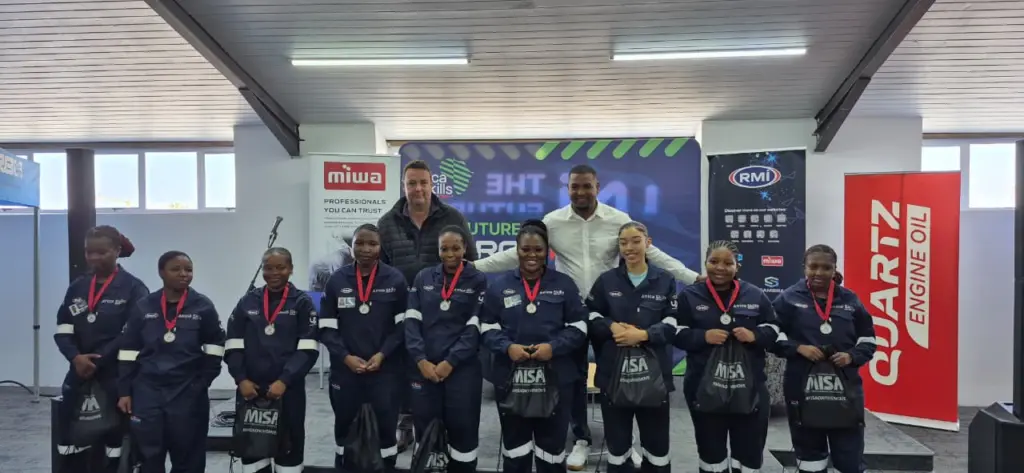
The three-day programme culminated in the Motor Mech Show on 15 August, providing a platform to showcase the practical skills and potential of young women entering the automotive aftermarket.
Nine women participated in the skills competition, with the field comprising new participants rather than being limited to just Project Dineo learners, a programme launched last year through the RMI.
The standard of performance was particularly encouraging, with the impact of the training provided by African Skills evident in the competitors’ knowledge and practical ability. Taking first place this year was Ayola Voorslag, in second place Meliza Taks and third Yonela Gulwa.
The event also attracted the participation of local mayors, adding further visibility to the importance of skills development and creating opportunities for young people within the automotive sector.
An “On the Couch” session featuring RMI HR and Transformation Director Noni Tshabalala, Project Dineo students and Sue Hageman from Harambee Youth Employment Accelerator, and Elsie Harmse, CEO at Africa Skills UXI, provided an opportunity to explore the experiences of young people and women in the automotive industry, while highlighting the importance of creating clear pathways into meaningful careers.
For MIWA, the George programme demonstrates the value of bringing the different parts of the automotive ecosystem together.
“Events such as this are about much more than a competition,” says van Mosseveld. “They are about creating connections between industry, suppliers, training institutions and young people. If we want an aftermarket that is equipped to service the vehicles of tomorrow, we need to make sure that our people have access to the right knowledge and skills today.”
MIWA thanks all the suppliers, training institutions, students, competitors, African Skills, UXI and industry stakeholders who contributed to making the George programme a success.